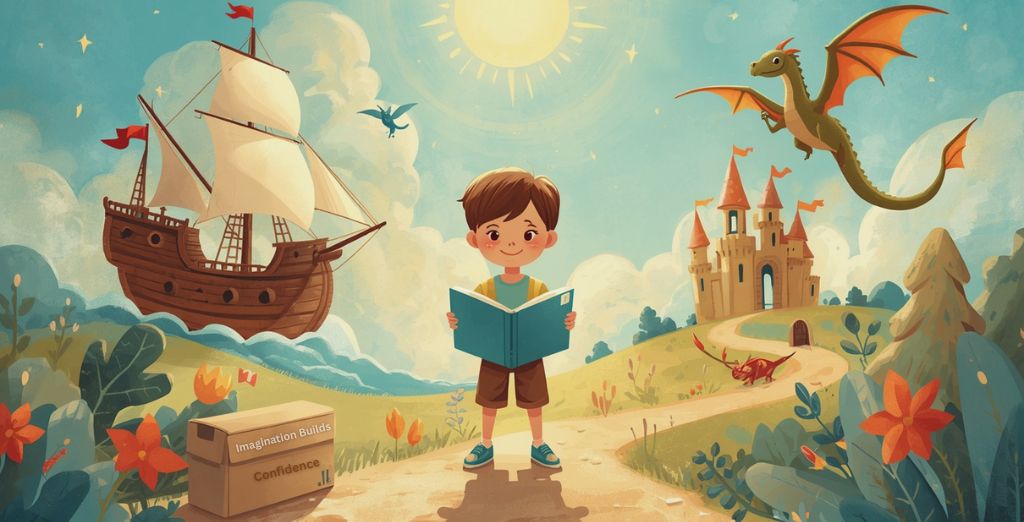
Children are naturally imaginative. Give them a blanket, and it becomes a castle. Give them a cardboard box, and suddenly they’re sailing across the ocean or exploring a distant planet. What may seem like simple play is actually an important part of childhood development.
Imagination does much more than entertain. It helps children understand emotions, solve problems, develop confidence, and learn how to face challenges. In many cases, the skills developed through creative thinking stay with them long after childhood.
As parents, grandparents, and educators look for ways to support emotional growth, imagination remains one of the most powerful tools available.
How Imagination Helps Children Grow Emotionally
Children experience emotions that they don’t always know how to explain. They may feel nervous about school, worried about making friends, frustrated by setbacks, or uncertain about new situations.
Imagination gives them a safe outlet for those feelings.
Through storytelling, pretend play, drawing, and creative activities, children can explore emotions without fear of being judged. They can create characters who face challenges similar to their own and imagine positive ways to overcome them.
This process helps children make sense of their experiences and better understand their emotions.
That is one reason why imagination helps children grow emotionally. Creative experiences allow children to work through feelings in a way that feels natural rather than forced.
Building Self-Confidence Through Creative Thinking
Confidence often begins with small successes.
When children create something from their imagination, whether it’s a story, a drawing, or a make-believe adventure, they make decisions, solve problems, and trust their own ideas.
These experiences build independence.
Building self-confidence through creative thinking teaches children that there isn’t always one right answer. They learn to explore possibilities, take risks, and feel proud of their efforts.
Over time, this confidence carries into other areas of life. Children who trust their creativity are often more willing to share ideas, participate in group activities, and approach new experiences with curiosity rather than fear.
They begin to understand that mistakes are part of learning, not something to avoid.
The Role of Imagination in Emotional Development
The role of imagination in emotional development goes far beyond creative play.
When children engage with stories, they experience situations from different perspectives. They connect with characters who face challenges, make mistakes, and learn important lessons along the way.
These experiences help children develop empathy and emotional awareness.
A child who reads about someone feeling lonely may become more sensitive to the feelings of others. A story about overcoming fear may help them feel more confident when facing their own challenges.
Imagination also encourages flexible thinking. Instead of focusing on obstacles, children learn to imagine solutions, possibilities, and positive outcomes.
This ability can help them manage stress and build resilience as they grow.
Why Imaginative Children Become Confident Learners
Confident learners are often curious learners.
Children who regularly use their imagination tend to ask questions, explore ideas, and enjoy discovering new things. They view learning as an opportunity rather than a test of their abilities.
This helps explain why imaginative children become confident learners.
Creative thinking encourages experimentation. Children learn that not every answer comes immediately and that persistence often leads to growth.
Whether they are creating stories, inventing games, or imagining solutions to everyday problems, they develop skills that support both academic and personal success.
Most importantly, they gain confidence in their ability to learn and adapt.
Helping Children Overcome Fears Through Imagination
Fear is a normal part of childhood.
Children may worry about trying something new, speaking in front of others, sleeping alone, or facing unfamiliar situations. While those fears are real, imagination can help children approach them differently.
Helping children overcome fears through imagination allows them to practice courage in a safe environment.
Stories often introduce characters who face obstacles and discover strengths they didn’t know they possessed. As children connect with these characters, they begin to see themselves in similar ways.
Through imaginative play, they can become a hero, explorer, problem solver, or helper. These experiences encourage them to believe they are capable of handling challenges in real life.
Confidence grows when children see themselves succeeding, even first in their imagination.
How Stories Support Confidence and Personal Growth
Books have a unique ability to combine imagination with meaningful life lessons.
Children often see parts of themselves in the characters they read about. They watch those characters grow, learn from mistakes, build friendships, and develop courage.
This is one reason stories that build character remain so valuable. They encourage children to think about kindness, perseverance, empathy, and self-belief while keeping them engaged through meaningful storytelling.
A wonderful example can be found in The Dragon of Happy Tails: Carter’s Quest by Guyla Adams. Through imaginative adventures, the story explores themes of courage, kindness, creativity, faithfulness, and personal growth, showing young readers how confidence often develops one lesson at a time.
Why Imagination Matters More Than Ever
In today’s busy world, children are often surrounded by schedules, screens, and constant stimulation. Yet imagination continues to offer something essential.
It gives children the freedom to explore, create, dream, and grow.
More importantly, it helps them develop emotional strength, confidence, and resilience. These qualities support them not only during childhood but throughout their lives.
Confidence rarely appears all at once. It grows through experiences, encouragement, and opportunities to discover what is possible. When children are encouraged to imagine, they learn something powerful: they are capable of more than they realize. And sometimes, that belief becomes the foundation for a lifetime of growth, learning, and self-confidence.